Wedding Invitation Wording: Examples for Every Style and Situation
Not sure what to write on your wedding invitation? Wording examples for formal, casual, religious, and destination weddings — plus tips for getting the tone right.
Key Takeaways
- Lead with the hosts' names, then the couple, then event details
- Match your wording tone to your wedding style — formal, casual, or cultural
- Include RSVP deadline, venue address, and dress code in the invitation itself
- Interfaith and multicultural weddings can blend multiple wording traditions
Posted by
 Marwan
Related reading
How to Share Your Wedding Invitation on WhatsApp (the Right Way)
A practical guide to sharing your digital wedding invitation via WhatsApp — including message templates, group etiquette, and tips for making it personal.
When to Send Wedding Invitations: The Complete Timeline
A month-by-month guide for when to send save-the-dates, invitations, and RSVP reminders — with adjustments for destination and holiday weddings.
Last-Minute Wedding Invitations: It's Not Too Late
Short on time? Learn how to create and send beautiful wedding invitations at the last minute — without the panic or the paper waste.
We'll be honest: wedding invitation wording is one of those things that feels like it should be easy and then absolutely isn't. Who goes on the first line? Do you say “request the honour” or “invite you to celebrate”? What if your parents are divorced? What if you're paying for the wedding yourselves? These questions trip up almost every couple, and the answers depend on formality, family dynamics, and personal taste. We've helped thousands of couples write their invitations, and we've noticed the same questions come up again and again. So here's everything we've learned, organized by style.
What's the Basic Structure of a Wedding Invitation?
Every wedding invitation, whether printed or digital, follows the same general structure. Think of it as six lines, each with a purpose. According to Emily Post's etiquette guide, the traditional format has remained remarkably consistent for over a century — which means once you learn it, you won't go wrong regardless of how formal or casual your event is.
- Host line — who is inviting (parents, couple, or both)
- Request line — the invitation itself (“request the pleasure of your company”)
- Couple's names — who is getting married
- Date and time
- Venue and location
- RSVP details — how and when to respond
That's it. Everything else is decoration. The key decision is tone: formal, semi-formal, or casual. Let's look at each.
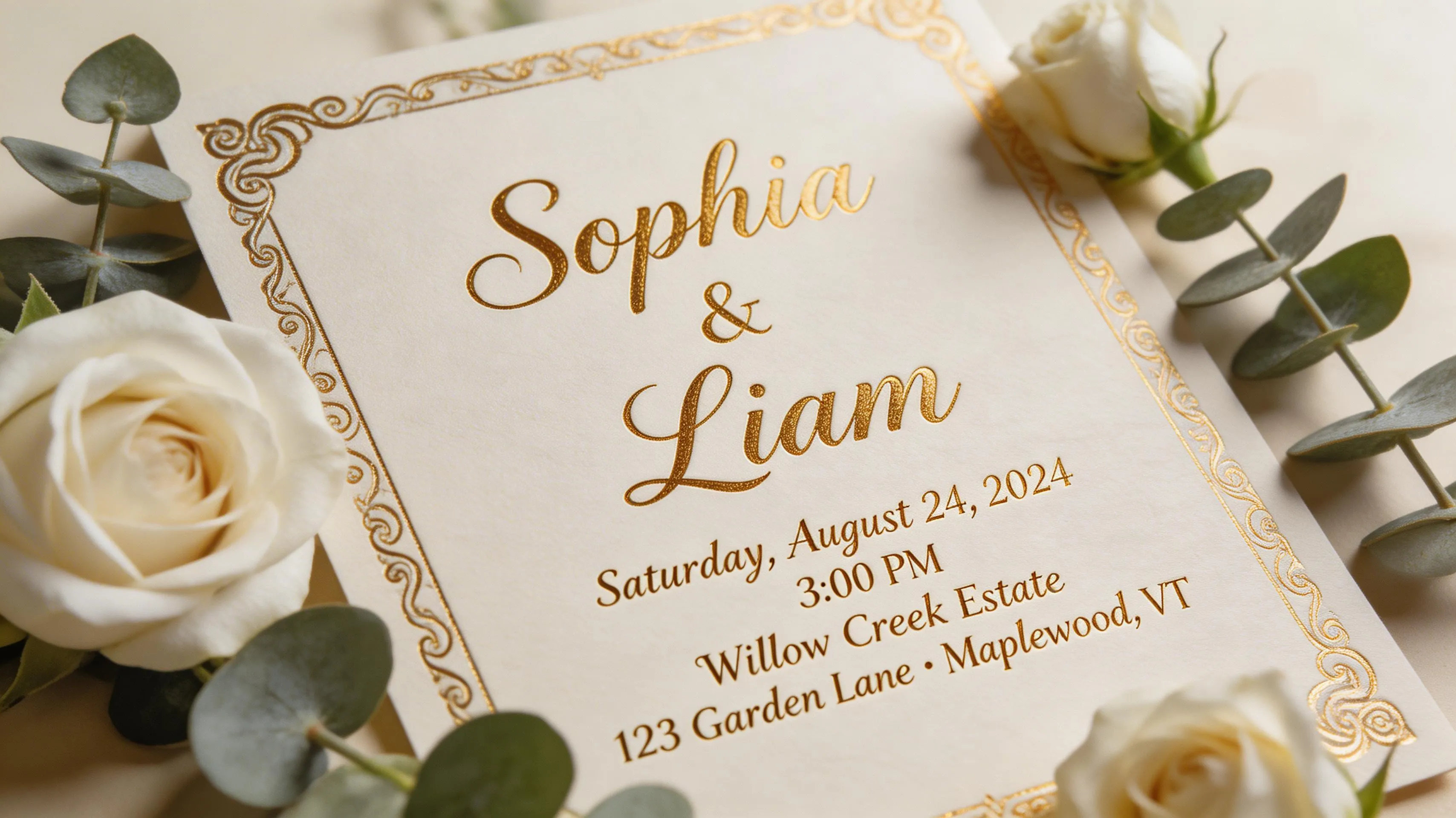
What Does Formal Wedding Invitation Wording Look Like?
Formal invitations are traditional, use full names (no nicknames), and are written in the third person. They're most common for black-tie events, religious ceremonies, or when parents are hosting. Here's a classic example: “Mr. and Mrs. Ahmad Hassan request the honour of your presence at the marriage of their daughter, Layla Hassan, to Daniel James Cooper, Saturday, the eighteenth of October, Two thousand and twenty-six, at half past four in the afternoon, The Grand Pavilion, Marrakech.” Notice the little details: “honour” with a “u” (traditional spelling), dates written out in full, no abbreviations. If both sets of parents are hosting, list them on separate lines. Brides magazine has a great breakdown of host line variations if you need more examples for blended families or when the couple is self-hosting.
How Do You Write a Casual or Modern Wedding Invitation?
Most couples we work with at SaidVows lean casual — and honestly, we love it. Casual wording feels warm, personal, and matches the energy of a digital invitation perfectly. There's something about a beautifully animated template that just pairs better with “come celebrate with us” than “request the honour of your presence.” Here's what that might look like: “Together with their families, Sarah and Omar invite you to celebrate their wedding — October 18, 2026 at 4:30 PM, The Grand Pavilion, Marrakech. Dinner and dancing to follow.” See how much more approachable that feels? The couple is front and center, parents are acknowledged without dominating, and “dinner and dancing to follow” tells guests exactly what to expect. Feel free to add personality — “We're getting married and would love you there” works just as well if it fits your vibe. Your invitation should sound like you, not like a legal document drafted by a committee.
Fun and Playful Wording Ideas
If your personalities lean playful, lean into it. Some of our favorite casual phrasings from SaidVows couples include: “We swiped right on forever — come celebrate with us!” and “After years of stealing each other's fries, we're making it official.” One couple wrote simply: “Free food. Open bar. Oh, and we're getting married.” Humor works when it is authentic — do not force a joke that is not your style. The best casual invitations read like a message you would actually send to a close friend, because that is exactly what they are. If your guests will read the invitation and think “that is so them,” you have nailed the tone perfectly.
How Should You Word a Religious Wedding Invitation?
Islamic Weddings (Nikah)
Islamic wedding invitations often begin with “Bismillah” (In the name of God) and may include Quranic verses. The families are typically named as hosts, reflecting the communal nature of the celebration in Islamic tradition. We offer dedicated Islamic templates with Arabic calligraphy, geometric patterns, and crescent motifs that pair beautifully with traditional wording. Our multilingual toggle means guests can switch between Arabic and English on the same invitation — no need for separate versions.
Christian Weddings
Christian invitations may reference the church ceremony and include a line like “request the honour of your presence at a Nuptial Mass.” For a less formal approach, “join us as we celebrate our union before God” works well while keeping the spiritual tone. Many Christian couples also include a Bible verse that's meaningful to them — 1 Corinthians 13:4–8 is a perennial favorite.
Interfaith and Multicultural
Interfaith weddings are increasingly common, and the wording can honor both traditions. Focus on the shared values — love, family, commitment — rather than specific religious language that might exclude one side. SaidVows's multilingual feature is especially helpful here — you can present the same invitation in two languages with a simple toggle, so every guest feels included regardless of which family they belong to. A sample interfaith wording that works well: “With gratitude for the love that has brought them together and with the blessing of their families, Layla Hassan and Daniel Cooper joyfully invite you to witness and celebrate their marriage.” Notice how this acknowledges family involvement and spiritual gratitude without naming a specific tradition. Both families feel honored, both cultural identities are respected, and the language is warm enough to feel genuine rather than diplomatically sterile. The key to interfaith wording is finding language that both families can read and feel represented by — if one side feels excluded or overlooked, the wording needs another pass.
What Should a Destination Wedding Invitation Say?
Destination weddings need extra information: travel logistics, accommodation suggestions, local activities. Digital invitations are ideal for this because you can include interactive maps, hotel links, and a full itinerary alongside the invitation itself — all in one link, instead of stuffing an envelope with inserts. A survey by The Knot found that destination wedding guests rank “clear travel information” as their number-one concern, ahead of even the ceremony date itself. A good approach is to keep the invitation itself short and warm, then link to a detailed event page with everything guests need to know. SaidVows lets you add custom sections for travel info, dress code, gift registry, and more. Your guests will thank you for keeping it organized instead of sending them twelve separate emails.
What Are the Most Common Invitation Wording Mistakes?
- Forgetting the RSVP deadline — always include one, ideally 3–4 weeks before the wedding
- Ambiguous plus-one policy — be explicit about whether guests can bring a date
- Misspelling names — triple-check, especially for in-laws and extended family
- Too much information on the invitation — save the schedule details for a separate section
- Inconsistent formality — if the invitation is formal, the RSVP shouldn't say “hit us up by October 1”
Common mistake that deserves its own callout: using “and guest” when you know your guest's partner's name. If your friend is in a relationship and you know their partner, address the invitation to both by name. “And guest” should only be used when you genuinely do not know who they might bring. It is a small detail, but it signals that you actually know and care about the people in your guests' lives. According to Emily Post, addressing both partners by name is considered the gold standard of invitation etiquette, regardless of whether the couple is married, engaged, or dating. It takes an extra five minutes to look up names, and the goodwill it generates is well worth the effort.
What's the Best Advice for Invitation Wording?
The best wedding invitation wording is the one that sounds like you. If you're formal people, go formal. If you crack jokes at dinner, let that show. Your guests already know you — the invitation should feel like an extension of your relationship, not a legal document. And if you're still stuck, just pick a template and start from there — sometimes seeing the layout helps the words come naturally. One final thought: do not let the wording paralyze you. Most guests will read your invitation in about 30 seconds and then look at the date, time, and venue. The wording matters — it sets a tone — but your guests are coming because they love you, not because your request line was perfectly constructed. Get it close, get it warm, and get it sent. Done is better than perfect, especially when “perfect” means your invitations go out a month late because you couldn't decide between “honour” and “honor.”
How Do You Handle Wording When the Couple Is Hosting Themselves?
Self-hosted weddings are increasingly common, yet the traditional invitation format assumes parents are footing the bill. When you're paying your own way, drop the parent host line entirely and lead with your names: “Together with their families, Sarah and Omar invite you to celebrate their marriage.” The phrase “together with their families” is a graceful nod to family involvement without implying financial hosting. If you want to skip the family reference altogether, simply write “Sarah Chen and Omar Hassan request the pleasure of your company at their wedding.” Both versions are perfectly acceptable in modern etiquette. The key is consistency — if you use first names on the invitation, keep first names throughout. If you go formal with full names, maintain that formality on the RSVP and any additional details. Mismatched tones between sections feel jarring, like wearing sneakers with a tuxedo.