When to Send Wedding Invitations: The Complete Timeline
A month-by-month guide for when to send save-the-dates, invitations, and RSVP reminders — with adjustments for destination and holiday weddings.
Key Takeaways
- Send save-the-dates 6–8 months out, formal invitations 6–8 weeks before
- Build your guest list and finalize details before designing the invitation
- Set your RSVP deadline 3–4 weeks before the wedding for catering headcount
- Digital invitations compress this timeline dramatically — days instead of months
Posted by
 Marwan
Related reading
How to Share Your Wedding Invitation on WhatsApp (the Right Way)
A practical guide to sharing your digital wedding invitation via WhatsApp — including message templates, group etiquette, and tips for making it personal.
Last-Minute Wedding Invitations: It's Not Too Late
Short on time? Learn how to create and send beautiful wedding invitations at the last minute — without the panic or the paper waste.
Destination Wedding Invitations: Why Going Digital Makes It Easy
Planning a destination wedding? Digital invitations handle time zones, travel logistics, multilingual guests, and last-minute changes. Here is how to do it right.
Timing your wedding invitations is more nuanced than people think. Send them too early and guests forget. Too late and they've already booked other plans. There's a sweet spot, and it shifts depending on whether you're having a local celebration, a destination wedding, or a holiday-season event. Emily Post recommends sending formal invitations six to eight weeks before the wedding, but the real timeline depends on your specific situation. Here's the complete schedule we recommend based on what actually works for the couples we've helped. One important note: these timelines assume a digital invitation. If you are using paper, add 3–4 weeks to every milestone to account for design, printing, and postal delivery. That extra month of lead time is exactly why so many couples are switching to digital — you reclaim weeks of your planning timeline and can use that time for things that actually matter, like finalizing the menu or rehearsing your vows.
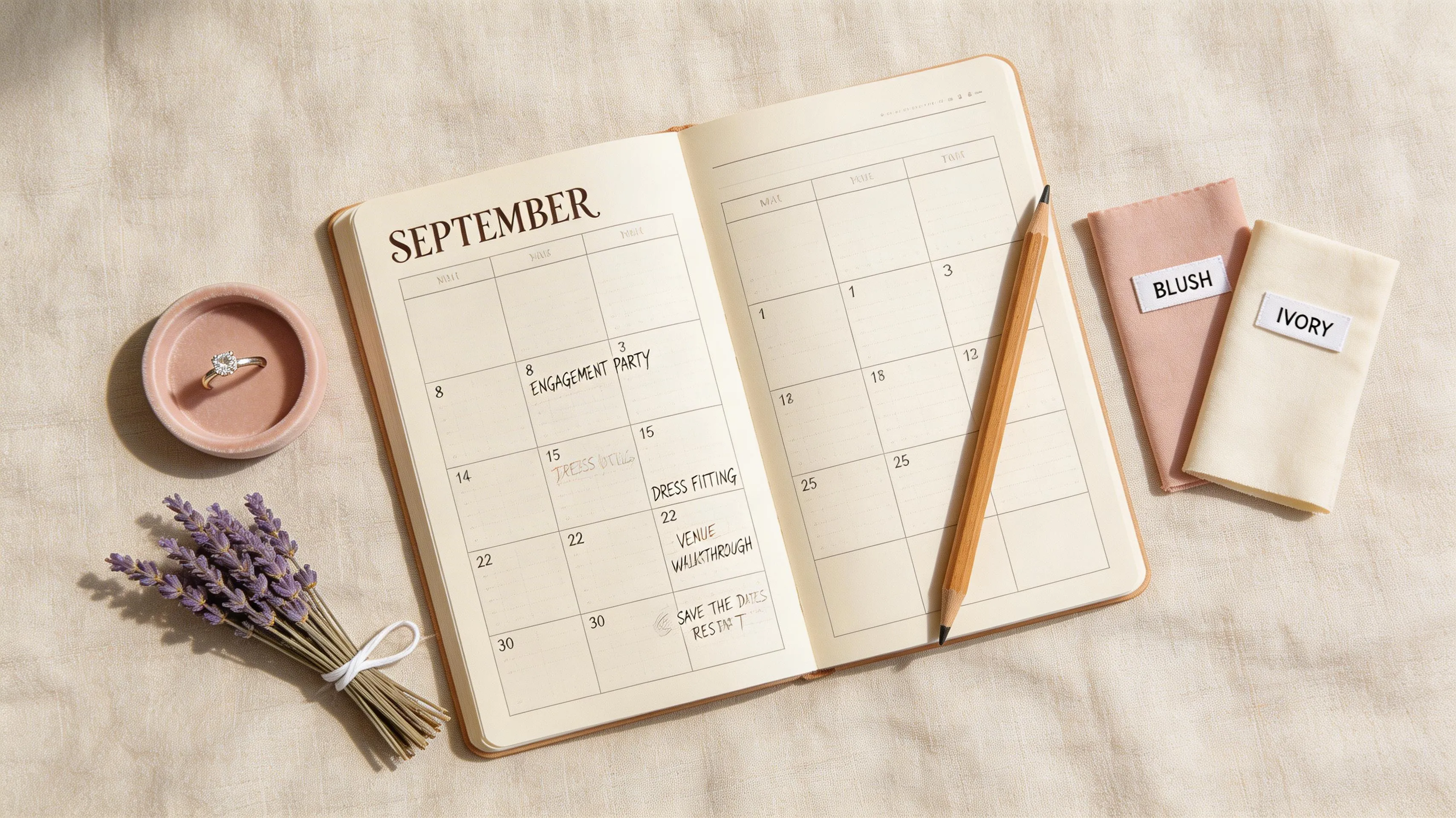
When Should You Send a Save-the-Date? (12 Months Before)
Save-the-dates are a heads-up, not a formal invitation. They just need the couple's names, the date, and the city. No RSVP, no venue details, no dress code. For destination weddings, send these at the 12-month mark so guests can start budgeting for travel. For local weddings, 8–10 months is fine. The Knot notes that save-the-dates are especially important if your wedding falls on a holiday weekend or during peak travel season — your guests may be planning vacations, and you want to be on their calendar before they book that trip to Italy.
With SaidVows, you can publish a save-the-date version of your invitation first, then update it with full details later. Same link, same design, no confusion. Your guests bookmark the link once and always have the most current information — no more “wait, did they change the venue?” confusion that comes from paper mailings. One important note: do not include an RSVP on your save-the-date. It is too early — guests cannot commit 12 months out, and early RSVPs often change. The save-the-date is purely informational: here is the date, here is the city, mark your calendar. The RSVP comes later with the full invitation. This two-phase approach keeps things organized and prevents the messy scenario of collecting RSVPs you will need to re-confirm months later anyway. Save-the-dates hold the date; invitations collect the commitment. Keep those two functions separate and your planning stays clean.
When Is the Right Time to Send Formal Invitations? (6–8 Weeks Before)
This is the standard window for local weddings, and it's been the conventional wisdom for decades for good reason. Guests have enough time to make plans without forgetting about you. For destination weddings, extend this to 3–4 months before the event to give guests time for travel bookings — flights get expensive fast, and you don't want your guests paying premium prices because they booked last minute. If your wedding falls near a major holiday (Christmas, New Year, Eid, summer vacation season), add 2–3 extra weeks. People plan holiday travel early, and you want to be on their calendar before they commit to something else. A digital invitation gives you flexibility here — you can publish early with basic details and add the full itinerary later as plans solidify. No need to wait until everything is finalized to get your date on people's calendars.
When Should the RSVP Deadline Be? (3–4 Weeks Before)
Set your RSVP deadline 3–4 weeks before the wedding. This gives you a buffer to chase non-responders and finalize numbers with your caterer — most venues require final headcounts 10–14 days out, so you need those numbers locked in. With digital RSVPs, most responses come in within the first 48 hours of sending — the instant-response factor is one of the biggest advantages over paper, where responses trickle in over weeks and you're left wondering whether people even received the invitation.
Why the RSVP Deadline Is a Hard Line, Not a Suggestion
Here is something most wedding planning guides gloss over: your RSVP deadline directly affects your caterer's final invoice. Most catering companies charge per confirmed head, and they need those numbers locked in 10–14 days before the event. If you set your RSVP deadline at three weeks out, that gives you exactly one week to chase stragglers before the caterer's cutoff. That's tight but manageable. Set the deadline at two weeks? You're essentially guessing on headcount, which means either paying for empty seats or scrambling to add plates. At $75–$200 per person, every uncertain guest costs real money. Treat your RSVP deadline like a vendor deadline — because that's exactly what it is.
When Should You Send RSVP Reminders? (2 Weeks Before)
About a week after the RSVP deadline, send a gentle reminder to anyone who hasn't responded. SaidVows automates this — one click sends a reminder to all non-responders. Don't feel bad about reminding people. They're not offended; they just forgot. Life is busy, inboxes are full, and your invitation is competing with work emails and grocery lists for attention. A friendly nudge is expected and appreciated. According to Brides, most couples need to follow up with 10–20% of their guest list, so you're in good company. If automated reminders don't work, a personal text or WhatsApp message usually does the trick. Keep it light: “Hey! Just nailing down final numbers for the caterer — would love to know if you can make it on the 18th. No pressure either way!” Most people respond within minutes once they realize they forgot. The key is to frame it as a practical need, not a guilt trip. Nobody wants to feel bad about a late RSVP — they want to feel like it's easy to fix, and it is.
What Should You Share the Week Before the Wedding?
Send a final update through your invitation with any last-minute details: parking instructions, schedule changes, weather-related dress code notes, or a reminder about the ceremony start time. This is also a great time to share practical details like “the parking lot is behind the venue” or “there's construction on Main Street, take the back entrance.” With a digital invitation, you update once and everyone sees it. With paper, you'd be sending yet another card — or texting everyone individually.
What to Include in Your Final Week Update
Think about what your guests will actually need the day of. A quick checklist: the ceremony start time (reiterated, because someone will forget), the exact venue address with a Google Maps link, parking or valet information, the dress code if it's specific, and any weather advisory if your event is outdoors. If you have a multi-event celebration — a Nikah followed by a Walima, or a ceremony followed by a cocktail hour at a different location — remind guests of the schedule and transit details. SaidVows lets you add a pinned update section at the top of your invitation, so guests see the latest info first without having to scroll past content they've already read three times.
How Does the Timeline Change for Holiday Weddings?
If your wedding falls near a major holiday — Christmas, New Year's, Eid, Thanksgiving, summer vacation season — shift your entire timeline forward by two to three weeks. Holiday periods mean your guests are already making travel plans, booking time off work, and committing to family gatherings. You need to be on their calendar before those plans solidify. A save-the-date at 14 months rather than 12, and formal invitations at 10 weeks rather than 8, can make the difference between a full guest list and a wave of regretful declines. This is one area where digital invitations offer a clear advantage — you can publish a save-the-date in minutes and update it with full details as your plans come together, rather than waiting until everything is finalized before ordering printed cards.
What Does the Complete Timeline Look Like?
- Save the date: 8–12 months before
- Full invitation: 6–8 weeks before (3–4 months for destination)
- RSVP deadline: 3–4 weeks before
- Reminder: 2 weeks before
- Final details: 1 week before
The beauty of digital invitations is that this entire timeline runs through a single link. No separate mailings, no additional postage, no “did you get the updated card we sent?” Just one URL that evolves with your plans. Check out our pricing plans to find the right fit for your wedding. The bottom line is that wedding invitation timing is less about following a rigid rule and more about giving your specific guests enough notice to make plans without so much lead time that they forget. Digital invitations give you significantly more flexibility within this window because you can publish early with basic details and layer in specifics as your plans firm up. The single-link model means your guests always have the latest information without you needing to send multiple rounds of correspondence. Plan your timeline thoughtfully, use digital tools to stay nimble, and remember that the goal is not perfection — it is making sure the people you love can be there on your day.
How Should You Adjust the Timeline for Multicultural Guest Lists?
If your guest list spans multiple countries or cultural traditions, the standard timeline needs tweaking. International guests need extra lead time for visa applications, which can take 4–8 weeks depending on the country. Guests from cultures where wedding attendance is considered non-negotiable — common in many Middle Eastern, South Asian, and Latin American communities — may reorganize significant commitments to attend, but only if they have enough notice. A practical approach: send a save-the-date to international guests and those in tight-knit cultural communities at the 12-month mark, even for a local wedding. Then send the formal invitation with full details at the 10-week mark rather than the standard 6–8 weeks. This extra buffer accounts for time zone differences in communication, longer decision-making cycles for guests who need to coordinate travel, and the reality that some cultural groups share invitations within extended family networks, which takes time to cascade through the community. SaidVows's multilingual support makes this especially seamless — one link serves guests across every time zone and language.