Islamic Wedding Invitations: Honoring Tradition in a Digital World
How to create an Islamic wedding invitation (Nikah) that respects cultural traditions while embracing modern convenience. Templates, wording, and etiquette.
Key Takeaways
- Islamic invitations often open with Bismillah and include Quranic verses
- Nikah and Walima details should be clearly separated with times and venues
- Regional styles vary — Moroccan zellige, Pakistani mehndi, Gulf minimalist
- Arabic calligraphy and RTL text support are essential for bilingual invitations
Posted by
 Marwan
Related reading
Multilingual Wedding Invitations: One Link, Every Language
Planning a multicultural wedding? Create a single digital invitation that speaks every guest's language with a built-in language switcher — no separate versions needed.
Islamic weddings are rich in tradition, meaning, and community. The invitation sets the tone for everything that follows — and getting it right matters deeply. When we started building SaidVows, we knew we couldn't just offer generic templates with a crescent slapped on top. We spent months studying Islamic calligraphy, geometric art traditions, and the specific wording customs across different Muslim communities — from Moroccan to Pakistani to Indonesian traditions. The result: 8 dedicated Islamic templates that honor tradition while embracing the convenience of digital. Here's what we learned along the way.
What Are the Traditional Elements of an Islamic Wedding Invitation?
Most Islamic wedding invitations begin with “Bismillah ir-Rahman ir-Rahim” (In the name of God, the Most Gracious, the Most Merciful). Many include a Quranic verse about marriage, most commonly from Surah Ar-Rum (30:21): “And among His signs is this, that He created for you mates from among yourselves.” The families of both the bride and groom are typically named as hosts, reflecting the community nature of the celebration. Unlike Western invitations where the couple may self-host, Islamic wedding invitations almost always feature both families prominently — the marriage is understood as a union of families, not just two individuals. According to Islamic etiquette traditions, the invitation itself is considered a form of hospitality, and sharing it widely is encouraged rather than restricted.
Common Quranic Verses for Wedding Invitations
Beyond Surah Ar-Rum 30:21, several other Quranic verses are popular choices for wedding invitations. Surah An-Naba 78:8 (“And We created you in pairs”) is beautifully concise and works well when space is limited. Surah Al-Furqan 25:74 (“Our Lord, grant us from among our wives and offspring comfort to our eyes and make us an example for the righteous”) is a favorite for couples who want to emphasize family blessings. Some couples also include a Hadith about marriage, such as the Prophet's words on the marriage being half of one's faith. The choice of verse sets a spiritual tone for the entire celebration and signals to guests that this is not just a social event but a sacred commitment rooted in faith.
How Should Islamic Wedding Invitations Be Designed?
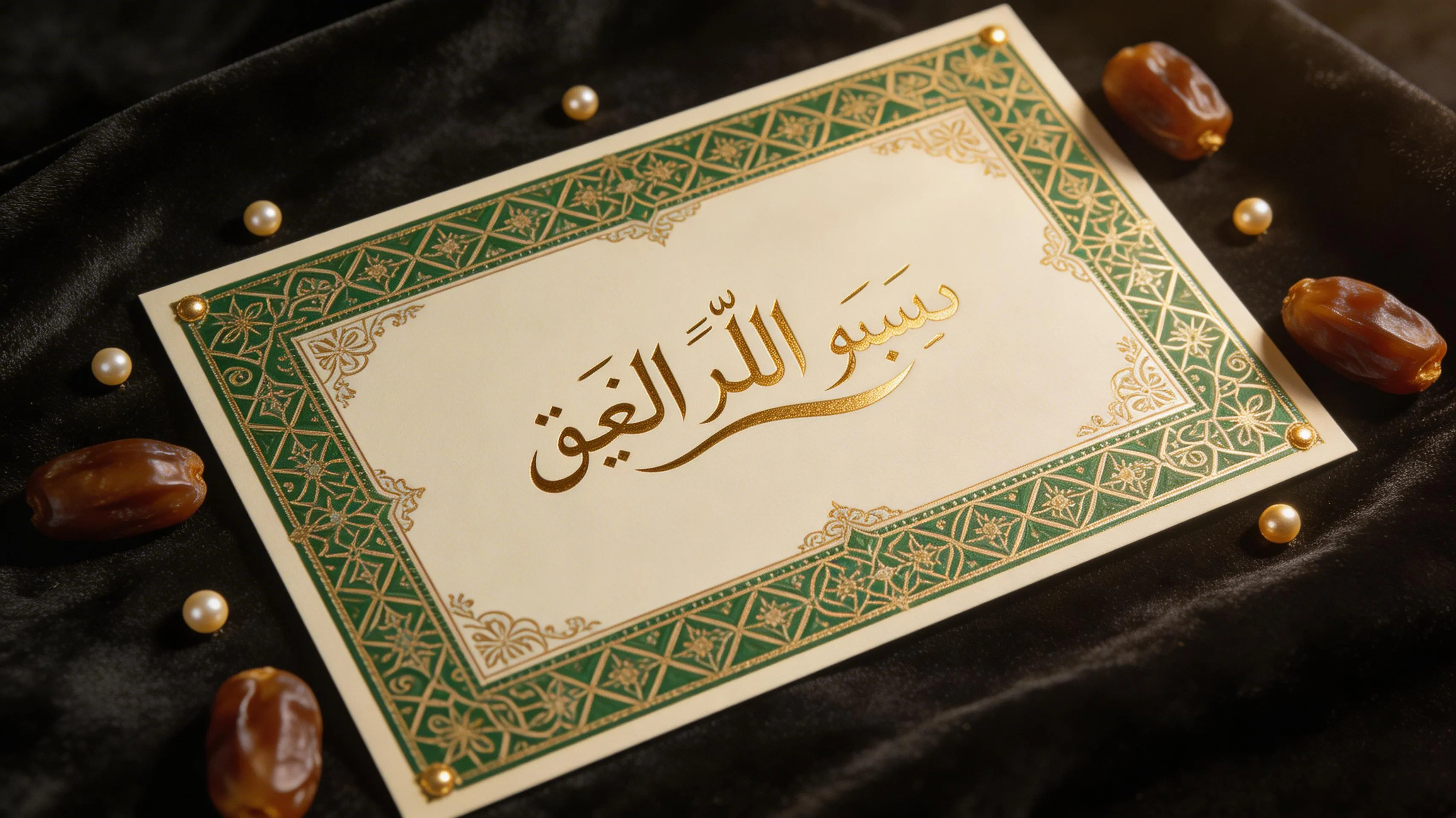
Islamic art has a rich tradition of geometric patterns, arabesque motifs, and calligraphy — rather than figurative imagery. Our templates reflect this: intricate tessellations, crescent and star accents, Arabic calligraphy rendered in gold or cream, and color palettes ranging from deep emerald and navy to soft blush and gold. Each template is designed to feel luxurious and culturally authentic, drawing on centuries of Islamic artistic tradition without looking like a history textbook. The goal is elegant and celebratory — something that would make both the young couple and their grandparents proud. One major advantage of digital invitations here is that Arabic text flows right-to-left, which creates layout challenges in print that many stationery designers handle poorly or charge extra for. Our templates handle bidirectional text natively, and the multilingual toggle lets guests switch between Arabic and English seamlessly. The layout mirrors correctly, the calligraphy stays crisp at any screen size, and you don't need to order separate Arabic and English versions — saving most couples hundreds of dollars compared to bilingual printed stationery.
Regional Design Variations
Islamic wedding aesthetics vary significantly by region, and we've designed templates with this in mind. Moroccan-inspired designs tend to feature zellige tile patterns and rich jewel tones — deep blues, emerald greens, and warm golds. Pakistani and South Asian styles often incorporate intricate mehndi-inspired borders and vibrant colors like magenta and turquoise. Gulf Arab designs lean toward minimalist luxury — clean lines, generous white space, and elegant gold calligraphy on deep navy or black backgrounds. Indonesian and Malaysian Muslim weddings favor softer palettes with floral motifs alongside geometric patterns. Whatever your cultural background, the key is finding a design that feels authentically yours rather than generically “Islamic.”
What Wording Should a Nikah Invitation Include?
A typical Nikah invitation includes: the Bismillah, a Quranic verse, the names of both families, the bride and groom's names, the Nikah ceremony date and time, the Walima (reception) details if separate, and the venue. Some couples also include the Mahr (dowry) details or a note about the ceremony's Islamic significance for non-Muslim guests who may be attending. If your wedding includes both a Nikah and a Walima on different days or at different venues, digital invitations make it easy to include both events with separate RSVP options — guests can attend one or both, and your dashboard tracks it all. For more wording examples across different styles, check out our wedding invitation wording guide.
Sample Nikah Invitation Wording
Here's an example that balances tradition with warmth: “Bismillah ir-Rahman ir-Rahim. The families of Yusuf ibn Ahmad Al-Rashidi and Amina bint Khalid Al-Sayed request the honour of your presence at the Nikah ceremony of their children, Yusuf and Amina, on Saturday, the eighteenth of October, Two Thousand and Twenty-Six, at 2:00 PM, followed by the Walima reception at 7:00 PM, The Grand Pavilion, Marrakech. May Allah bless this union with love, mercy, and tranquility.” Notice how the families are named first, the Islamic blessing frames the event, and both the Nikah and Walima are clearly distinguished with separate times. On a SaidVows template, each event can have its own RSVP section so you know exactly who is attending which part of the celebration.
What Is the Proper Etiquette for Sending Islamic Wedding Invitations?
In many Muslim communities, invitations are traditionally delivered in person — especially to elders and close family. This personal touch carries deep cultural significance; it shows respect and demonstrates that the family values the guest's presence enough to come to them directly. Digital invitations complement this beautifully: deliver the link in person to close family (show it on your phone, share via WhatsApp right there), and send it digitally to the broader guest list. This preserves the personal touch while reaching everyone efficiently. Several of our Muslim couples have told us they showed the digital invitation on an iPad when visiting elders — the animated calligraphy and video backgrounds made a bigger impression than any paper card could have.
Gender-Separated Events and Digital RSVPs
Many Islamic weddings include gender-separated celebrations — a ladies' party (often called a henna night or mehndi ceremony) and a separate men's gathering. Digital invitations handle this elegantly: you can create separate event sections within the same invitation, each with its own RSVP. Female guests see the option to RSVP for the ladies' event, while male guests see the men's gathering details. The Walima, which typically brings everyone together, has a unified RSVP. This kind of nuanced event management is nearly impossible with paper invitations without sending completely separate sets of stationery, which doubles your cost and your organizational headache. With SaidVows, one link handles it all. Ready to create your Islamic wedding invitation? Browse our dedicated templates and see how tradition and technology can work together beautifully. Our Premium and Luxury plans include the multilingual toggle and Arabic calligraphy templates that make Islamic invitations truly special.
How Can You Include Non-Muslim Guests Respectfully?
Many Islamic weddings include guests who are not Muslim — friends, colleagues, or family members from interfaith marriages. A thoughtful invitation helps them feel welcome without compromising your traditions. Consider adding a brief note explaining what a Nikah ceremony involves, what guests can expect, and any dress code guidance (such as modest attire or head coverings for women entering a mosque). SaidVows lets you add custom sections for exactly this purpose. A simple paragraph like “Our Nikah ceremony is an Islamic marriage contract witnessed by family and friends. The ceremony lasts about 30 minutes and includes prayers, a sermon, and the signing of the marriage contract. All guests are welcome, and we ask that women bring a scarf for the mosque portion of the ceremony” goes a long way toward making non-Muslim guests feel informed and comfortable rather than uncertain about what to expect. This kind of contextual information is nearly impossible to include on a traditional paper invitation without making it look cluttered, but on a digital invitation it is simply another section that guests can read if they need it and skip if they do not. The result is an invitation that respects Islamic traditions fully while remaining accessible and welcoming to every guest on your list, regardless of their background.
Why Are Digital Invitations Particularly Well-Suited for Islamic Weddings?
Beyond the multilingual and RTL text support we have already discussed, digital invitations solve several challenges specific to Islamic wedding logistics. Large guest lists are common — 300 to 500 guests is not unusual for many Muslim communities — and printing that many paper invitations is both expensive and time-consuming. Digital invitations scale effortlessly: whether you have 50 guests or 500, the cost and effort are the same. Multi-event celebrations including the Nikah, Walima, Mehndi, and Dholki can all be included in a single invitation with separate RSVP options per event, eliminating the need for multiple printed sets. And the tradition of hand-delivering invitations to elders is actually enhanced by digital — show the animated invitation on your phone or tablet when you visit, and the visual impact of moving calligraphy and geometric patterns makes a far stronger impression than any printed card could achieve.
How Do You Choose Between Islamic Template Styles?
With eight dedicated Islamic templates on SaidVows, choosing the right one comes down to matching your aesthetic with your cultural background and the formality of your celebration. For a grand Walima reception at a luxury hotel, lean toward templates with rich gold calligraphy on deep emerald or navy backgrounds — they convey the opulence the occasion deserves. For an intimate Nikah ceremony at a local mosque, a softer palette with cream and blush tones feels more appropriate, keeping the focus on the spiritual significance of the event. If your families come from different regional traditions, pick a design that blends elements rather than committing to one regional style exclusively. Preview each template with your actual content entered — the feel changes dramatically when you see your real names and your real venue in the design rather than placeholder text. And remember, you can switch templates at any point before publishing without losing any of the details you've already entered, so there is zero risk in experimenting.